Solar Engineering InsightFebruary 15, 2026
The Complete Solar Installation Guide for Homes and Businesses in Nigeria (2026 Edition)
FT
Engr. Frank Francostech
Chief Renewable Energy Engineer
## Introduction: Navigating Nigeria's Power Reality with Solar Energy
In Nigeria, reliable grid electricity remains a persistent challenge. With frequent power outages, escalating diesel fuel prices, and recent grid tariff increases under Band A classifications, homeowners and businesses in Port Harcourt, Lagos, Abuja, and across Rivers State are turning to solar energy as a permanent solution.
A properly designed hybrid solar system guarantees **24/7 continuous electricity**, eliminates generator noise and fuel expenses, and provides long-term financial freedom. This comprehensive guide covers everything you need to know before installing solar power in Nigeria.
---
## Step 1: Understanding the Core Components of a Solar Power System
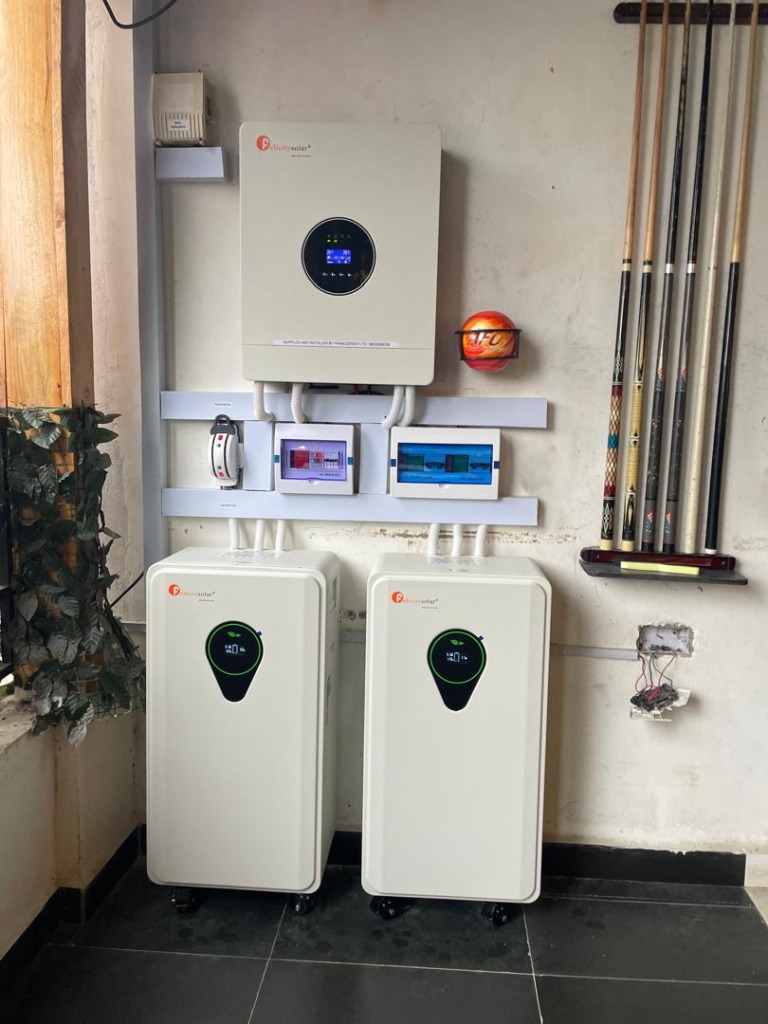
Every reliable solar energy system consists of four primary engineering components:
1. **Solar PV Panels**: Monocrystalline or bifacial panels that convert sunlight into Direct Current (DC) electricity. High-efficiency Tier-1 panels like **LONGi Solar** and **JinkoSolar** deliver 21%+ efficiency even on cloudy days in Port Harcourt.
2. **Hybrid Solar Inverter**: The central brain of the system. Converts DC power from solar panels or batteries into usable Alternating Current (AC) for appliances, while managing battery charging and grid fallback.
3. **Lithium Battery Storage Bank (LiFePO4)**: Stores excess solar energy generated during the daytime for seamless nighttime and blackout power supply. Lithium Iron Phosphate chemistry offers 6,000+ deep discharge cycles (10-15 year lifespan).
4. **MPPT Charge Controller & Protective Switchgear**: Maximizes solar energy harvesting and protects equipment against voltage surges, lightning, overcurrent, and short circuits.
---
## Step 2: Determining Your Energy Needs (Load Audit)
Before buying any solar equipment, calculate your total electrical load. Below is a standard sizing guide for Nigerian properties:
* **Starter Tier (Single Rooms, Self-Contained & 1-Bed Flats)**: Requires 1.5kVA - 3.5kVA Inverter, 3.6kWh - 5kWh Lithium Battery, 4 Solar Panels. Powers lighting, fans, TV, decoder, and laptop.
* **Intermediate Tier (2-3 Bedroom Bungalows & Apartments)**: Requires 3.5kVA - 8kVA Inverter, 7.2kWh - 15kWh Lithium Battery, 6 - 12 Solar Panels. Powers 1-2 Inverter ACs, refrigerator, deep freezer, lighting, water pump, and home office.
* **Advanced Tier (4-6 Bedroom Duplexes & Mansions)**: Requires 10kVA - 12kVA 3-Phase Inverter, 15kWh - 35kWh Lithium Battery, 10 - 24 Solar Panels. Powers 3+ ACs, pumping machines, microwave, security systems, and full household loads.
---
## Step 3: Choosing Between Hybrid, Off-Grid, and Grid-Tie Systems
* **Hybrid Systems (Recommended for Nigeria)**: Connected to solar panels, lithium batteries, AND public grid/generator. Automatically switches between sources without flickering.
* **Off-Grid Systems**: Completely independent of the public utility grid. Uses large battery storage banks and solar panels designed for 100% self-sufficiency.
* **Grid-Tie Systems**: Feeds solar power directly into appliances during daytime without batteries. Less practical in Nigeria due to daytime grid instability.
---
## Step 4: Installation & Commissioning Best Practices
Solar installation requires professional engineering standards:
* **Roof Orientation**: In Nigeria (Northern Hemisphere), solar panels should face South at a tilt angle of 5° to 15° for maximum year-round solar irradiation.
* **DC Cable Sizing**: Use pure copper UV-resistant solar cables (4mm² or 6mm²) to minimize voltage drop.
* **Safety & Protection**: Install dedicated AC/DC surge protection devices (SPDs), DC circuit breakers, earthing rods, and lightning arresters.
---
## Frequently Asked Questions (FAQs)
### Q1: How much does a complete solar system cost in Nigeria?
A starter 1.5kVA / 3.6kWh system ranges from ₦980,000 to ₦1.5M, while a standard 3.5kVA / 5kWh system costs around ₦1.55M to ₦1.95M. Intermediate 6kVA-8kVA systems range between ₦2.15M and ₦4.95M depending on battery capacity.
### Q2: How long do lithium solar batteries last in Nigeria?
Quality LiFePO4 lithium batteries last **10 to 15 years** (over 6,000 cycles at 80% Depth of Discharge), compared to traditional tubular or gel batteries which last only 2 to 3 years.
---
## Partner with Francostech Limited
Ready to switch to clean, uninterrupted power? Contact **Francostech Limited** at Plot 120 Trans Amadi Industrial Layout, Port Harcourt, or call **+234 803 338 9728** for a free engineering energy audit.
Frequently Asked Questions
Q: What is the key takeaway of The Complete Solar Installation Guide for Homes and Businesses in Nigeria (2026 Edition)?
A: Professional engineering load assessment and certified equipment selection guarantee 10+ years of uninterrupted solar power in Nigeria.
Need a Custom Solar Power Quote?
Our certified engineers in Port Harcourt are ready to analyze your electrical load and design the optimal hybrid solar system for your home or business.